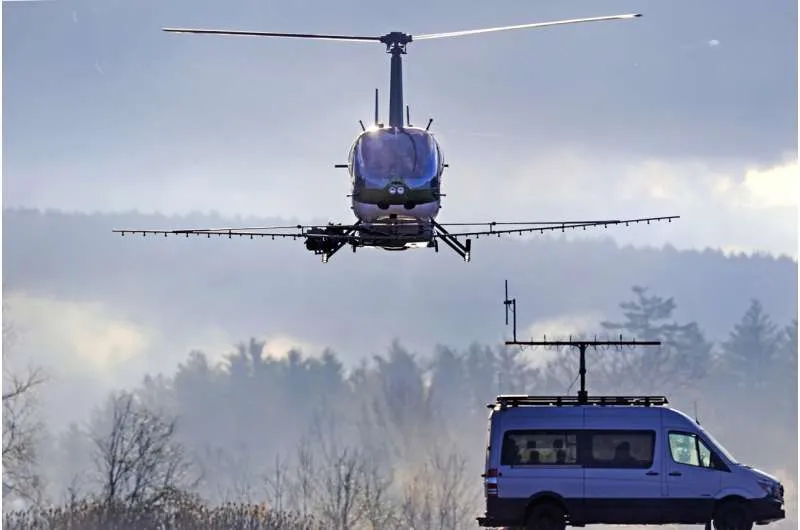
Autonomous Helicopters: A New Frontier in Agriculture and Disaster Management
Autonomous vehicles are no longer confined to roads. Rotor Technologies is pioneering the use of unmanned semi-autonomous helicopters, with a focus on agriculture, disaster relief, and more. Founded in 2021 by Hector Xu, the company aims to revolutionize aerial operations with its advanced technology.
The Sprayhawk: Redefining Crop Dusting
Rotor Technologies’ flagship helicopter, the Sprayhawk, is designed to tackle agriculture’s most demanding tasks. Built on the Robinson R44 airframe, the Sprayhawk replaces traditional pilot seats with advanced flight computers and communication systems. Equipped with five cameras, laser-sensing technology, a radar altimeter, GPS, and motion sensors, the Sprayhawk ensures precise navigation and terrain monitoring.
Key features include:
- Remote Operation: Eliminates the need for onboard pilots.
- Safety Enhancements: Reduces risks associated with pilot fatigue, powerline collisions, and exposure to chemicals.
- Efficiency: Covers larger areas than drones, addressing the limitations of battery-powered devices.
Safety in the Skies
The agriculture sector has long grappled with the dangers of crop dusting, where aircraft fly low at high speeds. Between 2001 and 2010, over 800 accidents occurred during agricultural operations, with significant fatalities. Autonomous helicopters like the Sprayhawk mitigate these risks by removing human pilots from hazardous conditions, offering a safer alternative for tasks like pesticide and fertilizer spraying.
Beyond Agriculture: Versatility in Action
While agriculture remains a primary focus, Rotor Technologies envisions broader applications for its autonomous helicopters, including:
- Disaster Relief: Transporting cargo to remote or inaccessible areas.
- Wildfire Management: Deploying precision water drops in fire-prone zones.
- Offshore Operations: Delivering supplies to oil rigs.
Challenges and Opportunities
Scaling up production and navigating regulatory landscapes remain significant hurdles. Rotor’s team is preparing for “production hell” in 2025, aiming to transition from bespoke builds to mass production. Additionally, FAA approval is a critical step toward commercial deployment.
Despite potential risks, such as congested airspace and technical failures, Rotor has implemented safety contingencies. These include a remote pilot system and a fail-safe “big red button” that ensures controlled landings during emergencies.
The Future of Autonomous Aviation
Rotor Technologies is at the forefront of a shift in aviation. By combining cutting-edge technology with practical applications, the company is poised to redefine safety, efficiency, and sustainability in agriculture and beyond.
As Xu notes, the journey to mass production will be challenging, but the potential to transform industries and improve safety is well worth the effort.