Distractions Delay Remote Drivers’ Reaction Times, Raising Safety Concerns
Remote driving, a critical fail-safe for Level 4 automated vehicles, faces significant safety challenges due to distractions. A recent study led by Newcastle University highlights the impact of disengagement on remote drivers, revealing delays in reaction times of over five seconds.
Key Findings
- Reaction Time Delays:
- Mental distractions, such as reading tasks, increased remote drivers’ reaction times by an average of 5.3 seconds when the autonomous vehicle required intervention.
- Decision-making during critical moments was delayed by 4.2 seconds, exacerbating safety risks.
- Safety Implications:
- Extended response times due to distractions could lead to delays in executing urgent “go” or “no-go” decisions, potentially resulting in accidents.
- Maintaining cognitive readiness, even when drivers are not actively controlling the vehicle, is essential for safety.
Teleoperation in Level 4 Vehicles
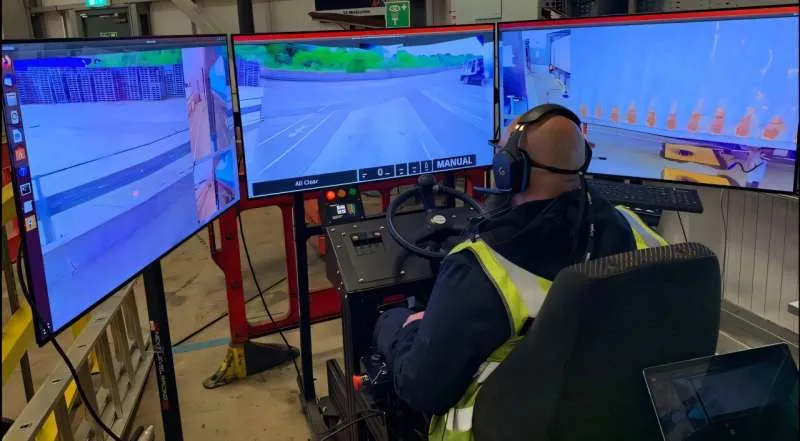
Level 4 automated vehicles operate with fail-safe and operational protocols, allowing remote control via teleoperation workstations. These vehicles, powered by advanced technologies like 5G, rely on remote drivers to intervene during emergencies.
However, the study emphasizes the need to improve remote driver systems to mitigate distractions and cognitive workload, ensuring prompt and effective responses.
Project V-CAL: Testing Real-World Applications
The research is part of Project V-CAL, a UK-based initiative testing 5G-enabled autonomous heavy goods vehicles (HGVs). Key features of this project include:
- Autonomous Delivery Systems: Testing zero-emission HGVs retrofitted with 5G-enabled teleoperation technology for logistics between Vantec and Nissan Sunderland.
- Private Road Trials: Vehicles navigate roundabouts, traffic lights, and other road users while monitored by remote drivers.
- Remote Oversight: The absence of onboard personnel highlights the critical role of remote monitoring.
Advancing Remote Driving Technology
Dr. Shuo Li, Senior Research Associate at Newcastle University, stressed the need for improved human-machine interfaces and advanced warning systems to reduce distractions and ensure situational awareness. Similarly, Professor Phil Blythe of Newcastle University emphasized the dual goals of enhancing safety and reducing costs through data-driven insights into remote driver performance.
Global Implications
Martin Kendall, Managing Director of Vantec Europe, envisions autonomous logistics solutions revolutionizing the HGV industry worldwide. He highlighted the importance of such research in creating training programs, refining protocols, and advancing technologies for remote driving.
This study marks a significant step in quantifying remote driver performance and shaping the future of autonomous vehicle operations, setting the foundation for safer, more efficient transport systems globally.