Estimating Pedestrian Crash Risks Without Using Actual Crash Data
Devising strategies to improve pedestrian safety has long relied on crash data. However, this approach faces challenges like data availability, ethical concerns, and delayed insights. A groundbreaking study by researchers at Queensland University of Technology (QUT) explores whether pedestrian crashes and their severity can be estimated without actual crash records.
The Innovative Approach
Data Collection:
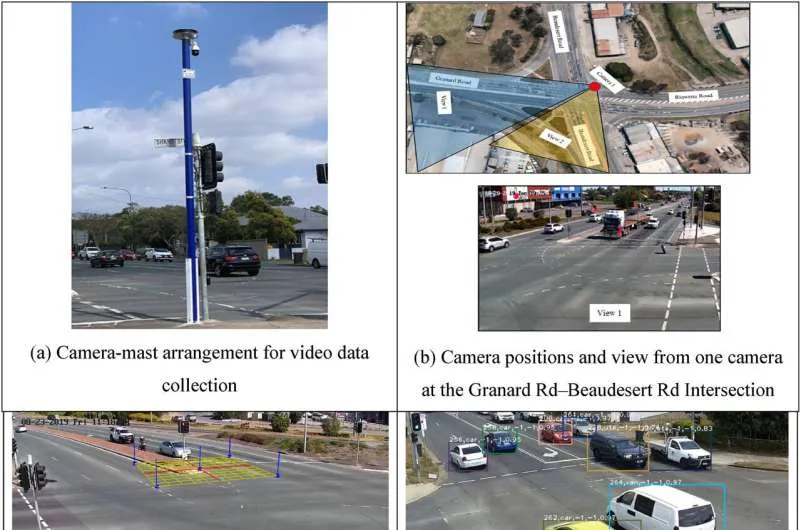
Researchers collected extensive video data from signalized intersections in Brisbane, Australia, capturing pedestrian and vehicle interactions.
Machine Learning and Extreme Value Theory:
The team developed a hybrid model combining machine learning techniques with extreme value theory. This method identifies and quantifies extreme pedestrian-vehicle interactions to predict crash risks and their severity.
Severe vs. Non-Severe Predictions:
The model demonstrated high accuracy:
- Observed crashes (5 years): Severe (2), Non-Severe (29)
- Predicted crashes (model): Severe (2.91), Non-Severe (30.91)
Advantages of the New Model
- Proactive Safety Management:
- Requires only a week of traffic movement data to estimate risks.
- Eliminates reliance on long-term crash statistics (3–5 years).
- Severity-Level Insights:
- Enables road authorities to prioritize countermeasures based on crash severity at specific locations like intersections.
- Scalability:
- Can be implemented at various traffic hotspots to identify high-risk areas and improve pedestrian safety.
The Role of Machine Learning
Machine learning enhances prediction accuracy, outperforming traditional non-machine-learning approaches by up to three times. By analyzing pedestrian-vehicle interactions, it identifies patterns that might signal future crash risks, facilitating early intervention.
Key Benefits:
- Precision: Accurately categorizes crashes into severe and non-severe risks.
- Scalability: Adapts to different urban environments.
- Versatility: Lays a foundation for broader applications in traffic safety and urban planning.
Implications for Road Authorities
This study offers a transformative tool for road safety management:
- Proactive Measures: Authorities can now develop targeted interventions without waiting for crash data.
- Prioritized Actions: Tailored countermeasures for severe crashes can reduce fatalities and injuries.
- Efficient Resource Allocation: Insights into risk levels enable smarter investments in infrastructure and safety programs.
Future Prospects
As machine learning continues to advance, its application in pedestrian safety could revolutionize urban planning and transportation safety management. This study not only underscores the potential of AI-driven analysis but also opens doors for further innovations to protect pedestrians on the road.
“This research could lay a strong foundation for future applications of machine learning in pedestrian safety,” says Yuefeng Li, Professor of Computer Science at QUT.